
Green Neighbourhood Communities receives the Royal Couple’s Community Award and the Nordic Council Environment Prize
Green Neighbourhood Communities has received the Royal Couple’s Community Award and the Nordic Council Environment Prize 2025 for its work in engaging citizens in the green transition. With over 47,000 members in more than 300 local communities in Denmark, Norway and Germany, the movement is recognised for building strong neighbourhoods where social bonds and green initiatives go hand in hand.
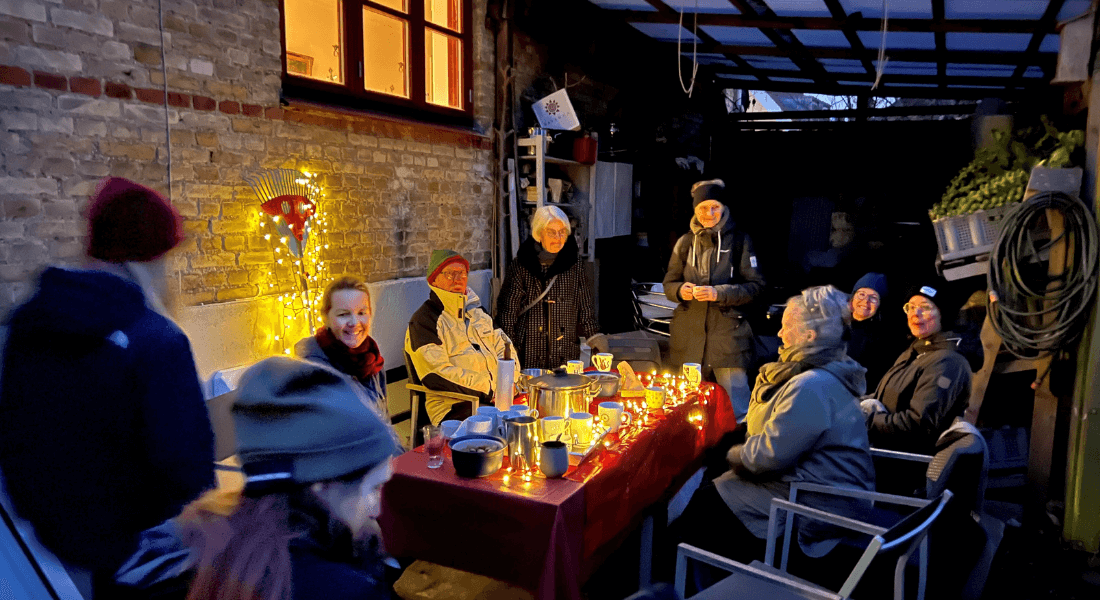
Green Neighbourhood Communities (Grønne Nabofællesskaber) mobilises through activities such as communal dining, swap economy, wild gardens and Climate Action Day. This year, the Nordic Council Environment Prize focused on Civil Society’s Green Contribution, and the jury highlights the movement as an example of how citizen-driven transition can make a difference:
– Green Neighbourhood Communities is deeply rooted in local communities and makes it easy and fun to live more sustainably – one neighbourhood at a time.
Rooted in Research
The movement is inspired by anthropological research. The project COMPASS (2018–2021), led by Associate Professor Quentin Gausset, documented that engaging in green communities reduces the carbon footprint by around 30% compared to the national average – while also increasing life satisfaction. This knowledge inspired the NGO Transition Now (Omstilling Nu), a practice partner in COMPASS. In 2020, Transition Now launched the first neighbourhood communities. Since then, the movement has grown rapidly.
This link between research and practice is now being explored further in SAMSKAB: From Grey Housing Associations to Green Neighbourhood Communities (2022–2025), supported by the VELUX FOUNDATION. The project combines anthropological research with practice to understand how green communities emerge and their impact on both the environment and quality of life.
Community Makes the Difference
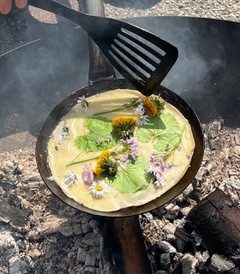 A new report from the SAMSKAB project shows that active members of green communities have, on average, a carbon footprint 43% lower than the Danish population as a whole. The effect is greatest for those who take active part in green activities – and it grows with the number of activities. The report also shows that members experience higher life satisfaction, even with a reduced material consumption. As Quentin Gausset puts it in a DR programme about the Royal Couple’s awards.
You simply join the communal dinner, the garden walk and the swap day. And then it works: something happens within us… There’s a kind of magic, something mysterious, that makes us change our behaviour. And that is the magic of community.