
Narrowing Horizons: Contingencies, coping practices and conflict handling among South Sudanese refugees after aid cuts
Authors: Ayo Degett (Programme Manager for Research, Danish Refugee Council, and associate at the Department of Anthropology, University of Copenhagen), Pernille Sikker Hansen (Researcher, Danish Refugee Council), Susan Reynolds Whyte (Professor, Department of Anthropology, University of Copenhagen).
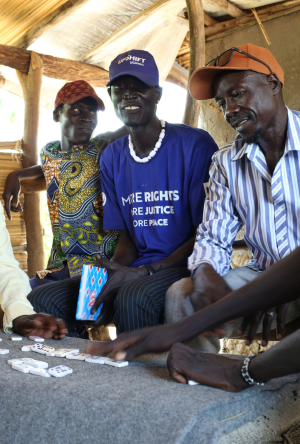 A new report from the PARTOCA team at the Danish Refugee Council, in collaboration with the Department of Anthropology, has been published. The report emerges from the ASPIRE project and examines how recent humanitarian aid cuts affect South Sudanese refugees in Uganda and Kenya, with a focus on coping practices, conflict dynamics, and efforts to sustain peaceful coexistence. It argues that reduced assistance forces refugees to shift from long-term aspirations to immediate survival, thereby increasing vulnerability and tensions.
The study employs a participatory, ethnographic methodology. Refugee peer researchers conduct participant observation, interviews, and focus group discussions, documenting 108 in-depth conflict cases across refugee settlements in Uganda and Kenya. The analysis is guided by a framework linking structural conditions, refugee subjectivity, and everyday endeavours, enabling a contextualised understanding of decision-making and conflict management.
The findings show that aid reductions have intensified food insecurity and weakened essential services like health care and education. Refugees increasingly rely on precarious and sometimes harmful coping strategies, such as debt accumulation, asset sales, theft, and forced marriage. These practices heighten conflicts within households and communities, while formal protection actors face reduced capacity. Although community-based initiatives continue to mediate conflicts, they also face limitations in their capacity to sustain peaceful coexistence under increasingly precarious conditions.
Visit the website and download the report.